

Electricity Basics: Understanding the Fundamentals
January 04, 2026- #course
- #skillet
- #electronics
What is electricity?
- Electricity is the flow of electric charge
- Carried by electrons
- Positive flows towards negative and negative towards positive
AC vs. DC: AC travels further and is the foundation of the grid
What is energy?
- moving muscles and heating food
- cannot be created or destroyed
- movement, heat, light, sounds, etc.
How does electricity work?
- electrons move between atoms within materials that conduct electricity
- electricy needs a closed path, liket a circuit to flow
- voltage: is the force that makes electrons flow. Like pressure in a water pipe.
- current: is the amount of electricity flowing, like the amount of water flowing through a pipe
Static vs. Current Electricity
| Static Electricity | Current Electricity | |
|---|---|---|
| Definition | Static electricity is the accumulation of electric charge on the surface of objects. This charge remains until discharged. | Current electricity is the continous flow of electric charge through a conductor |
| Examples | Rubbing a balloon on hair, lightning. | Electricity flwoing through wires to power homes and devices. |
| Characteristics | Charge buildup occurs without a continous flow, noticeable when it suddenly discharges, a shock. | Requires a closed circuit to be measured in amperes (A). |
Laser printers use static to put toner on paper.
Currents
AC (Alternating Current)
- Electricity constatly changes direction (positive to negative and back), like a wave. Measured in Hertz.
- Produced in power plants.
- Can easily be transformed to higher or lower voltages.
- Can travel long distances.
- House wall outlets
- Powering homes, appliances
- Easy to transform to lower voltages
- Electric shock can be very dangerous
DC (Direct Current)
- Electricity flows in a constant direction (only positive to negative).
- Primarily batteries
- Batteries convert chemical energy to currents
- Phone, laptop, solar panels, etc., often after converting to DC
- Can't go over long distances, lose power over distance
- High voltage DC is now being used in new ways to go over long distances in specific applications
- Devices that require consistent power use DC
- lower energy output over long distance
- harder to convert
- Generally safer, less EMF and shock. High voltage can be dangerous
- Preferred in sensitive environments
Measuring Electricity
- Voltage (V, Volts) potential difference between two points in an electrical field. Like pressure pushing water through a pipe.
- Current (Amperes, A) current is the flow of electric charge through a conductor. Like the flow of water through a pipe.
- Resistance (Ohms, Ω) resistance is a measure of how material opposes the flow of the current. It's like the friction that water experiences in a pipe.
- Step up or step down is converting voltage up or down
- Voltage is how much you feel, amps is the damage.
- Ohms law describes the relationship
Electronic Circuit
- Controls electri current to perform tasks
- It includes components like resistors and transistors onnected by wires
- Found in all electronic devices
Series Circuit
- Configuration: components are connected end to end forming a single path for current flow
- Current: same current through all components
- Voltage: Total is the sum of voltages across each component
- If one component fails, the entire circuit is broken
- Simplistic applications, like decorative lights
Parallel Circuit
- Configuraiton: Components are connected across common points, providing multiple paths for current
- Current: different paths can have different currents; total current is the sum of the currents through each path
- Voltage: voltage across each component is the same.
- Easier to troubleshoot.
- Adding more branches decreases reistence, decreasing load on a single path
- If one component fails, all continue to operate
- Complex systems, like home or auto electrical systems
Resistance
- Opposition to current flow in a material, measured in ohms (Ω)
- Influenced by material, length, cross-sectional area, and temperature.
- Longer or thinner wires have a higher resistance
- copper and aluminum has low resistance
- rubber, glass, and plastic have high resistance
- Semi-conductors: Silicone flow between conductor and insulator, under certain condiditons
- Resistance typically increases with temperature for conductors.
- Semi-conductors and other materials may decrease resistance with temperature increase
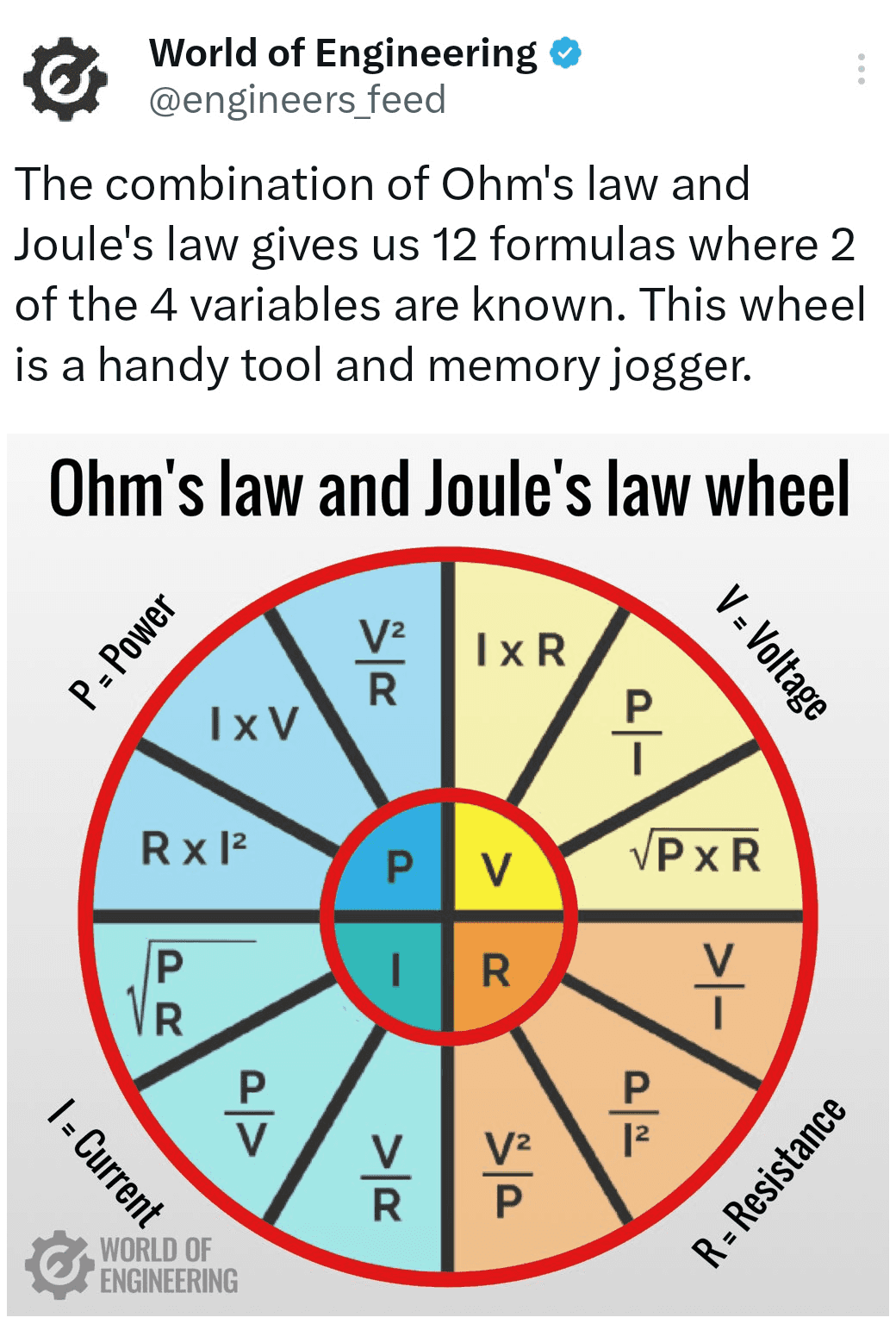
Ohm's Law
- Volate (V) equals current (I) multiplied by resistance (R)
- Used for calculating volatge, current or resistance in circuits.
- P = Power (Watts)
- V = Voltage (Volts)
- C = Current (Amps)
- In AC is used to understand impedence, DC is resistance
$$V=I \times R$$
$$5V=0.5A \times 10Ω$$
Health and Safety
- Critical importance: adhering to electical safety protocols is essential
- Consequences: electrical accidents can causae severe injuries and damage
Risks
- Exposed wire: can cause shock or short circuits
- Overloaded circuits: risk of overheating and fires
- Wet conditions: increase the likelihood of electrical shocks
- Faulty equipment: can lead to unpredictable hazards
PPE and Controlling Hazards
- Purpose: protects against electrical hazards and injuries
- Type of PPE: gloves, helmets, and protective clothing
- Proper use: ensure correct fitting and usage for maximum protection
- Maintence: regular cleaning and storage to maintain effectiveness
- inspection: check for damage or wear before each use to ensure safety
Controlling Hazardouse Energy
- Definition: Lockout/tagout prevents accidental energy relase during maintenance
- Procedure steps: follow a specific sequence to safely de-energize equipment
- Authorized personal: Only trained individuals should perform lockout/tagout.
- Verification: Ensure all energy sources are effectively isolated before work begins.
graph LR
    A((Prepare)) --> B
    B((Notify)) --> C
    C((Shudown)) --> D
    D((Isolate)) --> E
    E((Dissipation)) --> F
    F((Lockout / Tagout)) --> G
    G((Verrfication))
Best Practices
- Safety guidelines: follow specific procedures for each type of electrical equipment
- Codes and standards: adhere to established electrical codes for safety.
- Equipment inspection: regularily check and maintain electrical equipment
- Personal Protective Equipment: Use appropiate PPE when working with eletrical devices
- Emergency prodecures: know the steps to take in case of electrical accidents
Responding to Emergencies
- Effects of shock: can cause burns, muscle contractions, and cardiac arrest
- Response proedures: safely disconnect the victim from the electical source
- CPR importance: provide immediate CPR if the victim is unresponsive
- AED training: Use and AED to help restore normal heart rhythm